
🌱 Introduction
Persephone MBTI stories reveal that healing is not the absence of pain, but the transformation of it.
Among all mythological figures, Persephone—queen of both darkness and spring—perfectly mirrors the emotional depth and quiet strength of the INFP personality.
In mythology, she descends into the underworld yet returns each year to bring life back to the world above. This dual existence captures the essence of persephone mbti: sensitivity, resilience, and emotional rebirth.
Like many INFPs, Persephone learns to hold both shadow and light, grief and renewal, sorrow and serenity—all within one heart.
Her journey reminds us that true healing begins not when we escape darkness, but when we walk through it with grace and understanding.
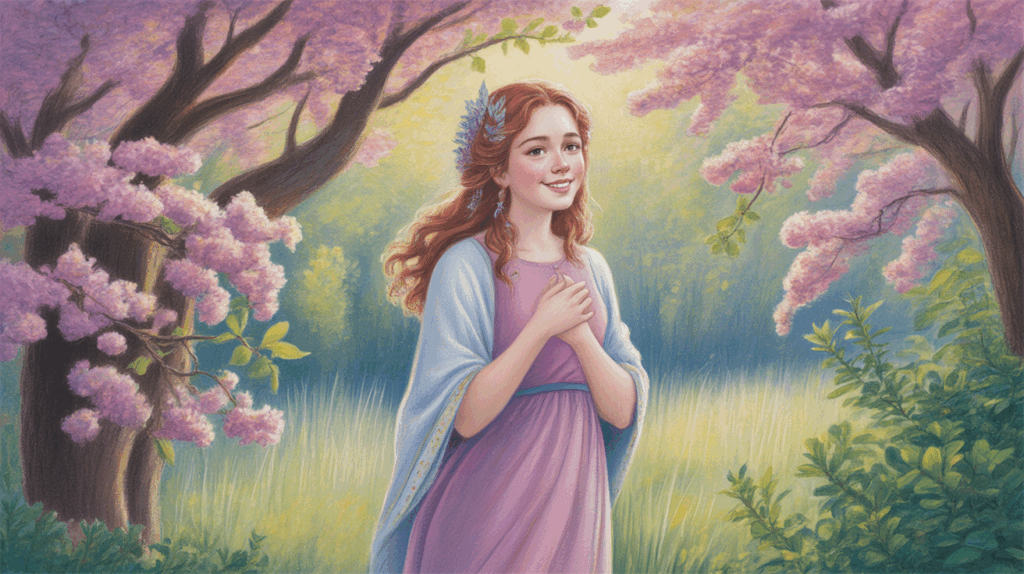
🔮 Personality Overview
INFPs, guided by Introverted Feeling (Fi) and Extraverted Intuition (Ne), are internal alchemists—turning pain into empathy, loss into purpose.
The persephone mbti archetype captures this transformation beautifully: she experiences the full spectrum of emotion but never loses her core values.
While others fear change, Persephone embraces it as a sacred cycle. Her time in the underworld represents introspection and acceptance; her return to the earth symbolizes renewal and creation.
Likewise, INFPs often retreat to their inner world during hardship—not to escape, but to rebuild from the inside out.
Both Persephone and INFPs show that emotional sensitivity is not weakness; it’s the soil from which wisdom grows.
📚 Key Traits
- Deep Empathy – The persephone mbti archetype feels everything fully. Compassion flows naturally from her understanding of pain.
- Transformative Inner Life – Her introspection becomes a sacred ritual of self-healing. INFPs, like Persephone, find meaning in solitude.
- Emotional Resilience – Though she endures loss, she rises again—proof that gentleness can survive the dark.
- Duality of Light and Shadow – The persephone mbti energy lives between worlds, balancing sensitivity with silent strength.
- Creative Renewal – Like spring returning after winter, she transforms her wounds into creativity and hope.
These traits illustrate that healing is not linear—it’s cyclical. INFPs, like Persephone, learn that rebirth requires both surrender and self-belief.
⚔️ Comparisons
Compared to Dionysus (ENFP), who seeks emotional liberation through passion and movement, Persephone finds hers through reflection and renewal.
While Dionysus celebrates expression, Persephone honors introspection—both paths lead to freedom, but one dances in sunlight, the other blooms from darkness.
Against Aphrodite (ESFP), Persephone’s love is quieter yet more enduring. Aphrodite embodies joy in the moment; Persephone represents love that survives seasons.
Together, these archetypes reflect the emotional range of humanity—vibrant, reflective, and ever-evolving.
The persephone mbti archetype therefore completes the trilogy of emotional transformation:
- Aphrodite (ESFP) – Emotion as connection
- Dionysus (ENFP) – Emotion as liberation
- Persephone (INFP) – Emotion as healing
💡 Lessons
From the persephone mbti perspective, healing means returning to yourself after being lost.
- Allow emotions to move through you, not define you.
- Recognize that darkness can teach compassion.
- Rebuild slowly; every winter of the soul prepares the next spring.
- Use creativity as recovery—writing, art, or reflection renew the heart.
INFPs and Persephone alike remind us that gentleness can be revolutionary. Healing doesn’t require force—it requires presence.
🌟 Final Thoughts
The persephone mbti archetype teaches that growth often begins in silence.
Through darkness, she discovers her light; through loss, her strength.
Her story is a timeless reminder that sensitivity, when embraced, becomes resilience.
INFPs embody this same quiet courage—the willingness to feel deeply, forgive freely, and start anew.
Their empathy is their superpower, turning emotional wounds into seeds of hope for others.
In a world that fears vulnerability, Persephone stands as a mythic symbol of emotional rebirth—the strength to descend, the wisdom to rise, and the grace to begin again.